Horse trailer safety monitoring - TWD EquiGuard TPMS and axle temperature protection

Horse Trailer Safety: Smart Monitoring to Protect What Matters Most

Horse Trailer Safety: Smart Monitoring to Protect What Matters Most

When you're hauling living cargo, "good enough" isn't good enough. Here's how smart monitoring protects your horses and your peace of mind on every trip.

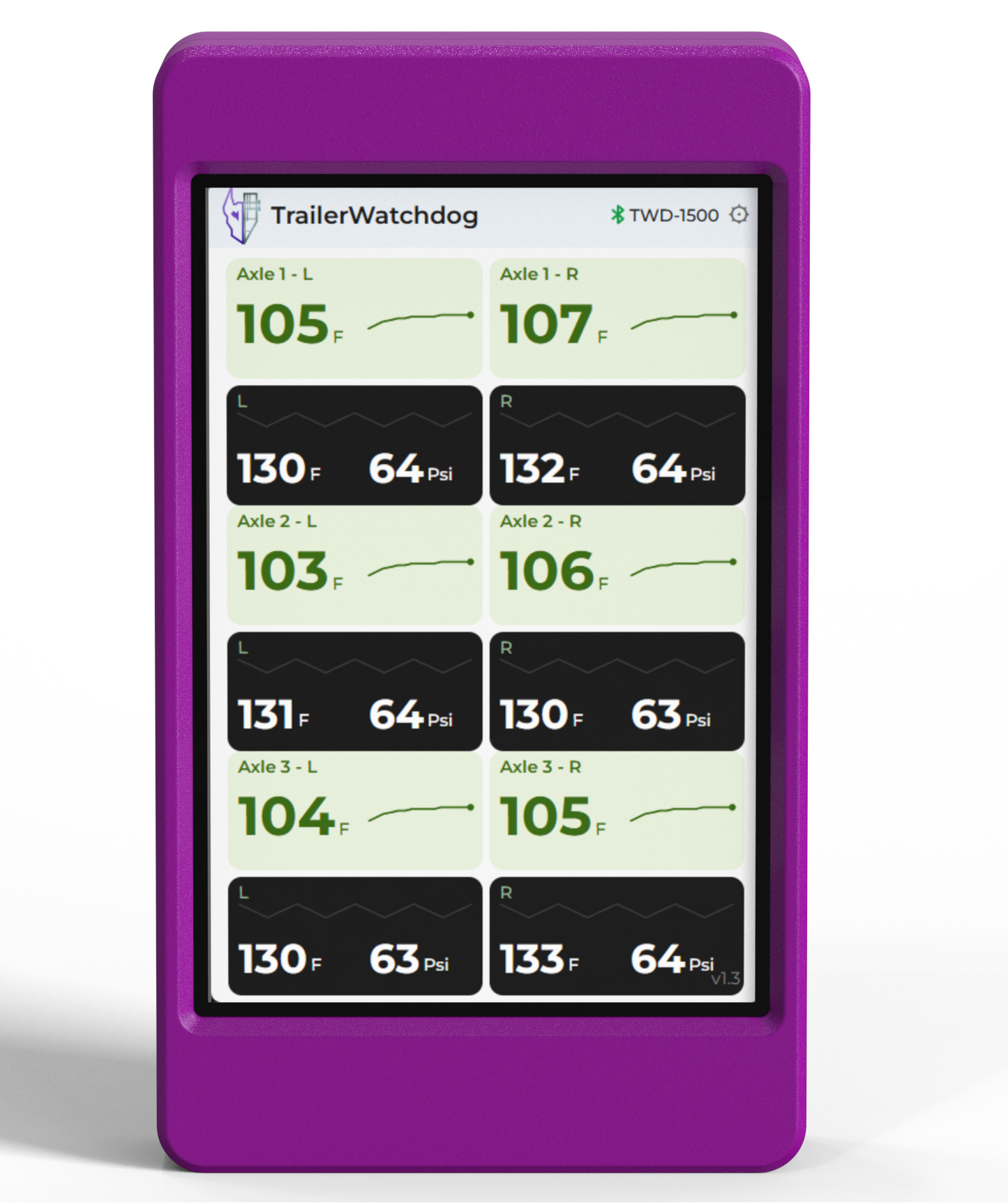
TrailerWatchdog TWD-1500 horse trailer monitoring system with TPMS and axle temperature sensors

There's a phrase every equestrian knows: you're only as safe as your trailer.

You spend thousands on veterinary care, premium feed, training, and tack. You'd never put your horse in a stall with a broken fence. But every time you load up and hit the highway, you're trusting two axles, four to six tires, and a set of bearings to keep your horse safe at 65 mph — and most horse trailer owners have zero visibility into what's happening underneath.

The numbers are sobering. 85% of trailer tire blowouts are preventable with proper pressure monitoring. 48% of roadside service calls are tire-related. And only 44% of trailer tires are properly inflated at any given time. Now add a 1,200-pound animal — or two — panicking inside a trailer that just had a blowout at highway speed.

This isn't about gadgets. It's about the duty of care you owe every horse you haul.

The Stakes Are Higher With Living Cargo

Every trailer failure is expensive and dangerous. But horse trailer failures carry consequences that don't apply to any other trailer type.

Blowouts With Horses Inside

A tire blowout on a boat trailer damages the fender and maybe the wiring. A blowout on a horse trailer can be life-threatening — for the horse and for you.

When a tire blows at highway speed, the trailer lurches violently. Horses, already standing on a moving surface, are thrown off balance. Scrambling hooves on a suddenly unstable trailer floor leads to leg injuries, falls, and panic. A horse that goes down inside a trailer during a blowout may not get back up without emergency extraction.

And that's before considering the tow vehicle dynamics. A trailer blowout on a loaded horse trailer can cause sway, jackknifing, or loss of control — especially in crosswinds or on two-lane roads with no shoulder.

The average cost of a trailer tire failure runs $1,800 to $4,000 in repairs alone. Add emergency veterinary bills for an injured horse, and you're looking at five figures before anyone talks about the emotional toll.

Bearing Failures Strand You With Panicking Animals

Bearing failure is the other critical risk — and it's arguably worse than a blowout because it escalates slower, giving you a false sense of security until it doesn't.

A bearing running dry generates heat. That heat builds over miles. By the time you notice smoke or smell something burning, the hub is potentially seizing. Now you're stopped on the shoulder of a highway with horses inside a trailer that cannot move.

Consider what happens next:

  • Horses are stressed, overheating, and possibly panicking
  • You can't easily unload on a highway shoulder — it's dangerous for you and the horses
  • Emergency roadside repair for a horse trailer isn't a standard tow truck call — you need specialized assistance
  • If it's summer, heat stress becomes a veterinary emergency within 30-60 minutes

A monitoring system with axle temperature sensing catches this failure mode 20-30 minutes before it becomes catastrophic. That's the difference between taking the next exit and calling an equine emergency vet from the interstate median.

Heat Stress: The Clock Starts When You Stop

Horses regulate body temperature through airflow. A moving trailer provides ventilation. A stopped trailer on a summer day becomes an oven.

Internal trailer temperatures can exceed ambient by 10-20°F within minutes of stopping. A horse's core temperature rises faster than most owners realize. If a mechanical failure strands you with horses inside the trailer, you're in a race against heat stress — and the clock started the moment you pulled over.

Every minute of advance warning from a monitoring system translates directly into welfare time for your horses. Catching a bearing problem early means you choose when and where to stop — ideally somewhere shaded, with room to safely unload if needed.

What Horse Trailer Monitoring Needs to Do

The equine community is rightly safety-obsessed. But when it comes to trailer monitoring, there's a gap between what people think they need and what actually protects horses on the road.

TPMS Alone Isn't Enough

Tire pressure monitoring is essential — underinflated tires generate excess heat, wear unevenly, and are far more likely to blow out under heavy loads. But a TPMS only monitors tires. It doesn't see the bearing that's running dry, the brake that's dragging, or the hub that's overheating from a failed seal.

For horse trailers, you need both tire pressure AND axle temperature monitoring. They cover different failure modes, and both failure modes are dangerous when horses are onboard.

Read our detailed comparison: Best Trailer TPMS Systems for 2026.

Real-Time Alerts, Not Dashboard Gauges

You're driving. You're watching traffic, monitoring your mirrors for trailer sway, keeping an eye on road conditions. You cannot also be staring at a dashboard-mounted TPMS display waiting for a number to change.

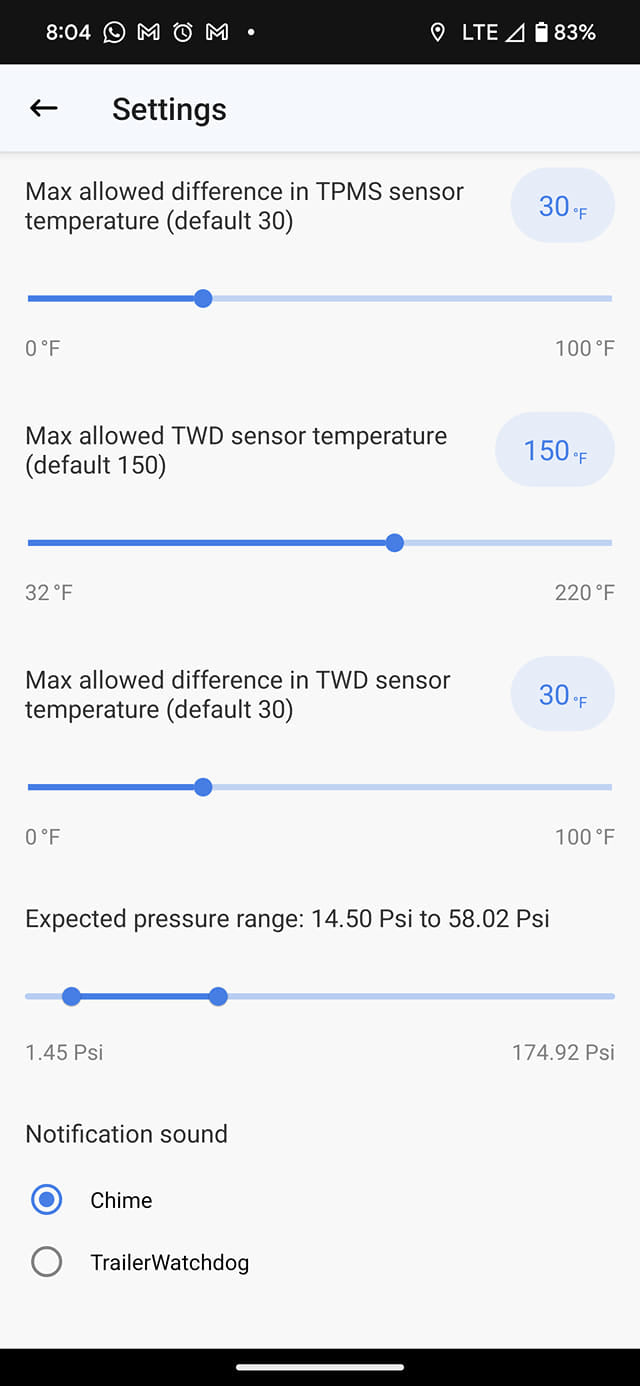
Effective horse trailer monitoring pushes alerts to your smartphone — audible, impossible to miss. When a tire drops 5 PSI or an axle temperature starts climbing, you hear about it immediately. No checking, no glancing, no hoping you notice.

Pre-Trip Baseline Verification

Smart horse trailer owners do a pre-trip inspection every time they load up. But "I kicked the tires and they felt fine" isn't verification. A monitoring system gives you actual numbers: confirmed PSI on every tire, baseline axle temperatures before you pull out of the driveway.

This is especially important for horse trailers that sit between shows, trail rides, or vet visits. Tires lose pressure over time. Bearings corrode between uses. Having verified data before every trip isn't paranoia — it's horsemanship.

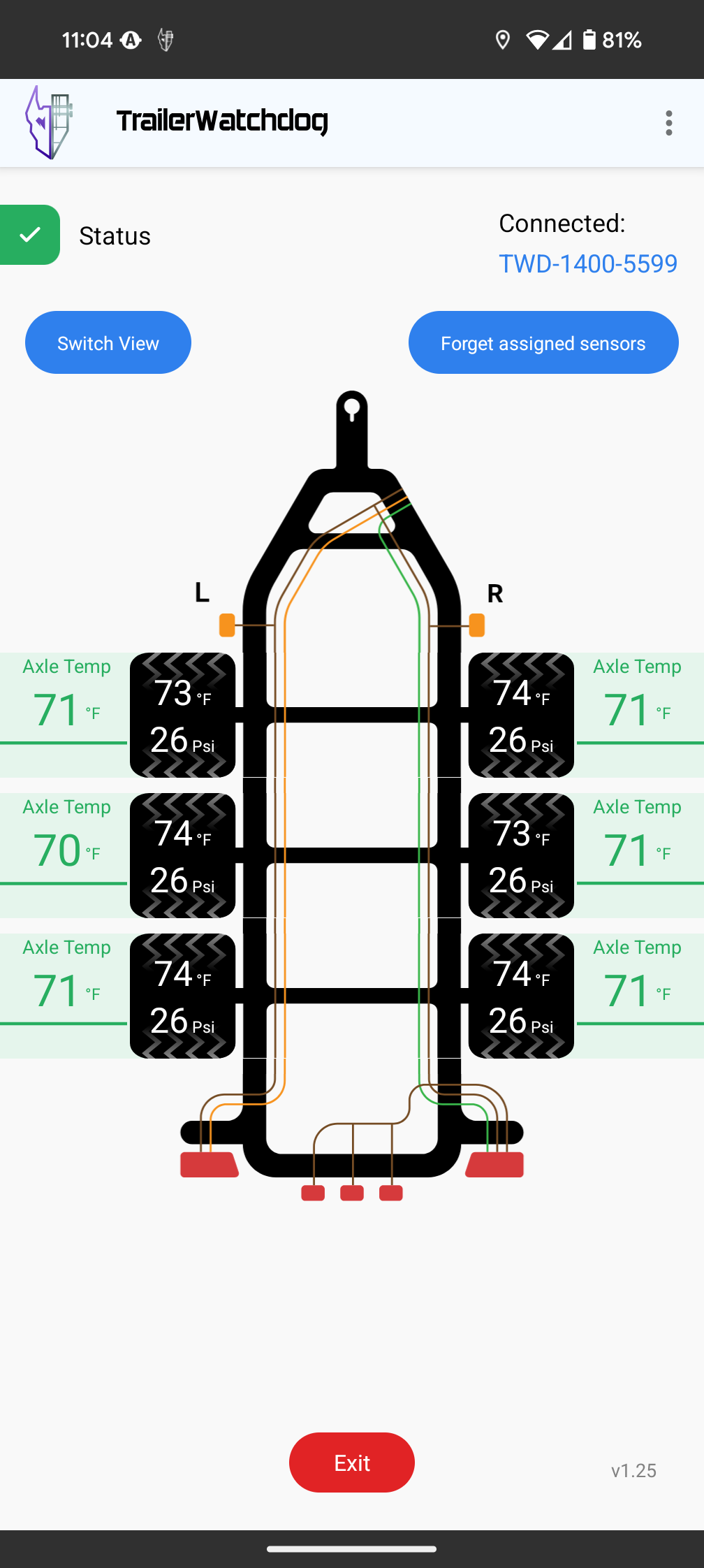
TrailerWatchdog smartphone app displaying real-time horse trailer tire pressure and axle temperature data

Common Horse Trailer Tire and Axle Issues

Issue Cause Warning Signs What TWD Monitors
Slow tire leak Nail, valve stem, bead seal Gradual PSI drop over miles ✅ Real-time pressure tracking
Underinflation blowout Low PSI + heavy load + heat Rising tire temp, falling PSI ✅ Pressure + temperature alerts
Bearing failure Grease breakdown, water intrusion Hub temperature climbing ✅ Axle temperature monitoring
Dragging brake Stuck caliper, misadjusted drum One axle hotter than others ✅ Per-axle temperature comparison
Tire age degradation UV/ozone cracking, dry rot Sudden pressure loss ✅ Rapid pressure drop alert

Why Experienced Horse Owners Invest in Monitoring

If you've been in the equine community for any length of time, you know: the people who are most safety-conscious aren't the beginners. They're the veterans who've seen what happens when something goes wrong on the road.

They've heard the stories — or lived them. The trainer who lost a client's horse to heat stress after a bearing failure stranded the trailer. The show competitor whose mare fractured a leg during a blowout on I-81. The trail riding club member who watched a wheel come off a friend's horse trailer at 55 mph.

These owners don't ask "is monitoring worth it?" They ask "which system is the best?" And they're willing to invest because they understand the math: $395 for monitoring vs. $5,000-$20,000+ for an unmonitored failure that injures or kills a horse.

For context on tire pressure specifics, see our trailer tire PSI guide.

The TrailerWatchdog EquiGuard: Built for Horse Trailer Owners

Related Reading

TWD EquiGuard — $395

The EquiGuard edition of the TWD-1500 is engineered for horse trailer owners who won't compromise on the safety of their animals:

  • Combined TPMS + axle temperature monitoring — Catches tire AND bearing/brake failures before they endanger your horses
  • Real-time smartphone alerts — Audible warnings you can't miss while driving
  • Bluetooth 5.0 — Reliable signal from trailer to cab, even through steel and aluminum
  • Magnetic no-drill mounting — Zero modifications to your trailer. Installs in 10 minutes.
  • IP67 waterproof — Rain, mud, wash-down resistant
  • Trend analysis — Track bearing and tire health over time, not just trip-by-trip
  • Made in USA — Engineered and assembled in Ijamsville, Maryland

Shop the TWD EquiGuard →

TrailerWatchdog easy magnetic installation on horse trailer - no drilling required

Installation: Quick, Clean, No Modifications

Horse trailer owners appreciate that the TWD-1500 uses magnetic mounting — no drilling into your trailer's frame, no permanent modifications. Attach the sensors, open the app, pair, and you're protected.

This matters for horse trailers specifically because many owners are particular about their trailer's condition and resale value. No drill holes means no rust points and no modification disclosures if you sell.

Full installation walkthrough: TWD-1500 Installation Guide.

Frequently Asked Questions: Horse Trailer Monitoring

Will the sensors scare my horses during installation?

No. The TWD-1500 sensors attach magnetically to the outside of the trailer near the hubs and wheels. There's no noise, vibration, or change to the trailer's interior. Your horses won't know they're there.

How quickly will I be alerted to a problem?

The TWD-1500 monitors continuously during towing and pushes alerts to your smartphone in real time. A sudden pressure drop or abnormal temperature rise triggers an immediate notification — audible and on-screen. You'll know about a developing problem minutes before it becomes a failure.

Can I monitor a gooseneck horse trailer?

Yes. The TWD-1500's Bluetooth 5.0 provides the range needed for gooseneck configurations. The magnetic sensors mount on each axle position regardless of trailer length or hitch type.

Is this worth it for short trips (under 30 miles)?

Absolutely. Bearing failures and blowouts don't wait for long highway trips. Underinflated tires are just as dangerous at 45 mph on a county road as they are at 70 mph on the interstate. And short trips often mean less pre-trip vigilance — which is exactly when problems sneak through. The peace of mind alone is worth it when horses are onboard.

What about multi-horse trailers with more axles?

The TWD-1500 system supports multiple sensor configurations. Whether you're running a 2-horse bumper pull or a 4-horse gooseneck with living quarters, the system scales to cover every tire position and axle.

The Bottom Line: Your Horse Depends on Your Trailer

You don't cut corners on feed. You don't skip vet checks. You don't ride in equipment you don't trust. Your trailer should meet the same standard — and right now, most horse trailers are rolling down the highway with zero monitoring of the systems most likely to fail.

85% of blowouts are preventable. Bearing failures give thermal warnings 20-30 minutes before catastrophe. The technology exists to catch these problems before they endanger your horses. The only question is whether you'll have it installed before you need it.

The TWD EquiGuard gives you TPMS and axle temperature monitoring in one system, built specifically for the demands of horse trailer towing, at a price point that's a fraction of a single emergency vet bill.

Related reading: